
Electrochemical Cell Designs for Producing Iron Metal from Oxide Powders and Salt Water
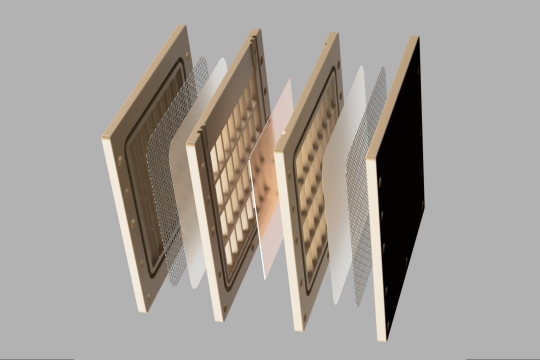
Lead inventor: Paul Kempler
Co-inventors: Anastasiia Konovalova
Licensing contact: Christine Gramer
Image is AI generated.
1. Technology Overview
The invention presents an innovative electrochemical cell design for producing iron metal from iron oxide powders and salt water. This technology leverages low-cost and abundant raw materials to produce high-purity iron, while co-producing valuable byproducts such as chlorine and sodium hydroxide. The process is highly efficient, scalable, and environmentally friendly, offering a sustainable alternative to traditional iron production methods. Currently in the development stage, this technology holds significant potential for cross-industry applications in steel manufacturing, chemical production, and renewable energy.
2. Key Features and Benefits
- Cost-effective production: Utilizes low-cost and abundant raw materials, reducing overall production costs.
- High efficiency: Achieves high selectivity and efficiency in iron production.
- Scalability: Modular design allows for easy scaling to industrial levels.
- Environmental benefits: Reduces greenhouse gas emissions compared to traditional methods.
- Co-production of byproducts: Produces valuable byproducts such as chlorine and sodium hydroxide, adding economic value.
3. Applications and Market Focus
- Steel manufacturing: Enhancing the efficiency and sustainability of steel production.
- Chemical industry: Providing a cost-effective source of chlorine and sodium hydroxide.
- Renewable energy: Supporting sustainable materials for renewable energy projects.
- Environmental solutions: Offering a low-carbon alternative for industrial processes.
- Research and development: Enabling further innovation in electrochemical processes and materials science.
4. Commercial Advantages
- Strategic benefits: Offers a sustainable and cost-effective solution for iron production.
- Implementation advantages: Simplifies the production process and reduces environmental impact.
- Market positioning: Positions the technology as a key enabler in the green technology sector.
- Competitive edge: Provides a unique and efficient method for producing iron and valuable byproducts.
5. Partnership Opportunities
- Licensing partners: Ideal for companies in steel manufacturing, chemical production, and renewable energy.
- Cross-sector benefits: Offers advantages to multiple industries, including steel, chemicals, and green technology.
- Market opportunities: Addresses diverse market needs, from sustainable steel production to chemical manufacturing.
- Collaborative development: Potential for joint ventures with research institutions and industrial partners to further enhance the technology.
Patent filing: US20240200217A1