
Method for Detection for Hydrosulfide Anion (HS-) and Hydrogen Sulfide (H2S)
Lead inventor: Michael Haley
Co-inventors: Ryan Hansen, Matt Hartle, Darren Johnson, Michael Pluth, Blakely Tresca
Licensing contact: Elliot Reed
1. Technology Overview
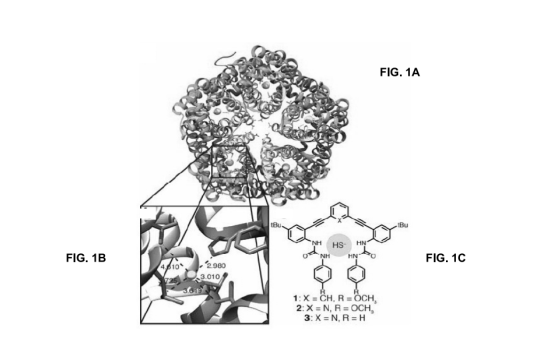
The invention focuses on a new method for detecting hydrosulfide anion (HS?) and hydrogen sulfide (H2S) using reversible, supramolecular binding interactions. This method utilizes non-covalent interactions, specifically hydrogen bonds, to detect HS?/H2S without altering the analyte concentration. The technology is currently in the development stage, with promising cross-industry applications in biological detection, imaging, and targeted drug delivery.
2. Key Features and Benefits
- Reversible detection: Preserves analyte concentration during experimentation.
- Supramolecular interactions: Utilizes hydrogen bonds for detection.
- Versatility: Applicable to various industries, including biotechnology and pharmaceuticals.
- Scalability: Synthesis processes can be scaled for larger quantities.
- Targeted applications: Ideal for biological detection, imaging, and drug delivery systems.
3. Applications and Market Focus
- Biological detection: Use in detecting and imaging biological processes involving HS?/H2S.
- Drug delivery: Integration into targeted drug delivery systems.
- Biotechnology: Development of novel biological detection and imaging methods.
- Pharmaceutical industry: Synthesis of complex organic molecules for various applications.
- Chemical industry: Use in advanced synthesis techniques and equipment.
4. Commercial Advantages
- Strategic benefits: Provides reliable and scalable HS?/H2S detection methods for various applications.
- Implementation advantages: Facilitates integration into existing biological detection and imaging systems.
- Market positioning: Positions technology as a key enabler for advanced biological detection and drug delivery systems.
- Competitive advantages: Offers reversible detection and supramolecular interactions compared to existing methods.
5. Partnership Opportunities
- Ideal licensing partners: Biotechnology firms, pharmaceutical companies, chemical industry leaders.
- Cross-sector partnership benefits: Collaboration opportunities across biotechnology and pharmaceutical industries.
- Diverse market opportunities: Potential for global market expansion in regions with strong biotechnology and pharmaceutical industries.
- Collaborative development: Opportunities for joint development of hybrid devices and custom synthesis services.
Patent filing: US11187690B2